Cart
0
You may also like




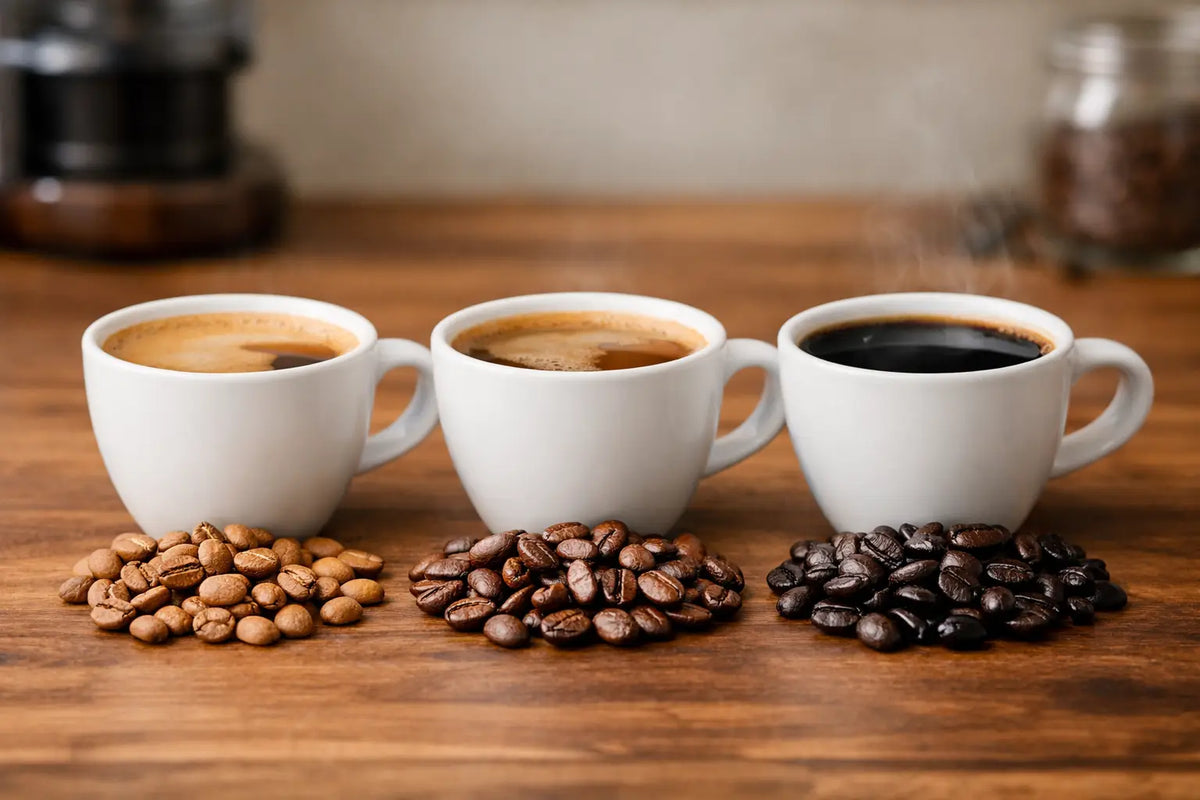
A coffee bag can tell you where the beans were grown, how they were processed, and what flavors to expect. But coffee roast levels often make the fastest difference in your cup. They determine how much of the bean’s original character remains, how much roast character takes over, and how the coffee will meet your routine.
The right roast is not the darkest one, the smoothest one, or the one someone else calls strongest. It is the one that delivers the flavor, body, and energy ritual you want from the first sip. Start with intention. Then choose accordingly.
Roasting applies controlled heat to green coffee beans, transforming them into the aromatic brown beans you grind and brew. As the roast progresses, the beans lose moisture, expand, darken, and develop new flavors. Sugars caramelize. Acids change. Oils move closer to the surface.
The basic categories are light, medium, and dark. They are useful, but they are not absolute. A medium roast from one roaster may sit slightly lighter or darker than a medium roast from another. Origin, bean density, processing method, and the roaster’s target profile all affect the result.
That is why color alone cannot tell the whole story. A high-grown Kenyan coffee and a lower-density Brazilian coffee can react differently under the same heat. Great roasting respects that difference. It does not force every bean into the same finish line.
One distinction matters immediately: roast level is not caffeine level. Bean for bean, the difference is small enough that it should not drive your decision. Your dose, brew ratio, and serving size have a much greater impact on how much caffeine reaches your cup. Roast level is primarily a flavor and texture decision.
Light roast coffee spends less time in the roaster. The bean retains more of its natural acidity and origin-specific flavor. Think citrus, berries, stone fruit, florals, tea-like texture, and cane sugar sweetness. A washed Ethiopian may feel bright and aromatic. A light-roasted Peru can bring clean sweetness and a crisp finish.
This is coffee for people who want to taste place. The growing region, elevation, and processing method show up with greater definition. When the coffee is exceptional, a light roast can feel precise rather than sharp.
The trade-off is that light roast asks more from your brewing. Water that is too cool, a grind that is too coarse, or an underdeveloped recipe can leave the cup sour, thin, or unfinished. Freshly ground beans and a thoughtful brew method make a noticeable difference.
Pour-over, drip coffee, and immersion brewers can all work well with light roasts. If you want clarity without noise during a focused work block or a slower morning reset, this is often the right direction. Let the coffee speak before the roast does.
Choose a light roast when you enjoy bright, layered coffee and want to explore single-origin character. It is especially rewarding for black coffee drinkers who notice subtle changes from one origin to the next.
If you regularly add cream, flavored syrups, or heavily textured milk, a light roast can get lost. That does not make it the wrong choice. It simply means you may prefer a more developed roast profile with greater body.
Medium roast sits in the middle for good reason. It balances origin flavor with the familiar comfort of roast-developed sweetness. You may find notes of caramel, chocolate, toasted almond, brown sugar, ripe fruit, or soft spice, depending on the coffee.
For many people, medium roast is the most versatile option. It carries enough brightness to stay lively, enough body to feel complete, and enough sweetness to work across black coffee, milk drinks, and everyday brewing methods. It is composed. Never flat when roasted with care.
A strong medium roast should not taste like a compromise. It should taste intentional. The best examples preserve a coffee’s personality while rounding the edges that can make a very light roast feel demanding or a very dark roast feel overwhelming.
Medium roasts are excellent for automatic drip machines, French press, AeroPress, and espresso-style drinks. They are also a confident choice for a household with different preferences. One person can drink it black; another can add milk without losing the coffee beneath it.
When your schedule moves fast, consistency matters. A medium roast is built for repeat performance: the first cup before meetings, the refill between tasks, the weekend brew when you finally have time to slow down.
Look for tasting notes that match your preferences. If you want comfort and depth, choose chocolate, nut, or caramel notes. If you want more lift, look for fruit, citrus, or honeyed sweetness. The label gives you a direction, but your brew method controls the final expression.
Dark roast coffee stays in the roaster longer, producing a deeper color, lower perceived acidity, and more pronounced roast flavors. Expect dark chocolate, baking spice, toasted sugar, smoke, or a pleasantly bittersweet finish. The body often feels fuller and the texture more substantial.
A well-executed dark roast is not burned coffee. It is controlled development. The goal is depth without ash, intensity without harshness, and a finish that makes you want another sip rather than a glass of water.
Dark roasts are a natural fit for those who want a bold cup that stands up to milk, cream, or ice. They also work beautifully in espresso and coffee pods, where concentrated brewing can reward a coffee with structure and weight. If your ideal morning cup is rich, direct, and unmistakably coffee-forward, dark roast has a place on your shelf.
The trade-off is reduced origin distinction. The deeper the roast, the more the roasting process becomes the dominant flavor. That can be exactly what you want. But if you are buying a distinct single-origin coffee for its blueberry, jasmine, or tropical fruit character, a dark roast will not be the clearest expression of that work.
Your brewer should influence your choice. Not because there are rigid rules, but because each method emphasizes different qualities.
Espresso creates a concentrated cup. Medium and dark roasts are often easier to dial in and more forgiving with milk, though a carefully developed light roast can produce a vivid, modern espresso. Drip brewing gives medium roasts a reliable stage, while light roasts reward precision and clean water. French press emphasizes body and texture, making medium-dark and dark profiles especially satisfying. Cold brew tends to soften acidity and amplify chocolatey, nutty notes, so medium and dark roasts often feel naturally at home there.
Grind matters just as much. A premium roast brewed with the wrong grind can still disappoint. Use a coarser grind for French press, a medium grind for most drip machines, a finer grind for espresso, and adjust from there based on taste. Sour or weak coffee often needs a finer grind or longer extraction. Bitter, dry coffee may need a coarser grind or shorter extraction.
Roast level is a powerful filter, not the entire story. Consider origin, process, freshness, and your preferred format alongside it. A medium roast from Tanzania will not taste like a medium roast from Bali. The first may lean bright and fruit-driven; the second may bring a more earthy, syrupy profile. Both can be outstanding. They simply serve different moments.
Freshness also changes the experience. Coffee needs time after roasting to settle, especially for espresso, but it should not sit forgotten in a cabinet for months. Buy quantities you can enjoy while the coffee is still expressive. Store beans in an airtight container away from heat, light, and moisture. Skip the refrigerator and freezer for the bag you open every day.
At SHIFT Coffee, roast level is part of the decision, not the whole decision. The better question is simple: what do you want your cup to do for you? Bring clarity. Build momentum. Hold its own in a latte. Finish a demanding day with something grounded and refined.
If you are unsure where to begin, choose medium roast for range, light roast for vivid origin character, or dark roast for depth and body. Then brew it well for a week before making a judgment. One rushed, over-extracted cup should not decide your relationship with an entire roast style.
Your palate gets sharper through repetition. Notice what stays with you: the brightness, the weight, the sweetness, the finish. The best coffee is not a rule you follow. It is a standard you set, one intentional cup at a time.


