Cart
0
You may also like




Coffee does not begin with roasting.
It begins with place.
The slope, elevation, soil, rainfall, temperature, shade, variety, and post-harvest decisions all shape what eventually lands in your cup. Roasting and brewing reveal that potential. They do not invent it.
That is the terroir test: taste the environment through the coffee.
For Shift Coffee, that means building a Global Selects collection around distinct origins rather than flattening every bean into the same generic profile. Our single-origin coffee collection moves from Tanzania to Bali, Kenya, Papua New Guinea, Mexico, and Peru: six growing environments, six expressions, six different reasons to pay attention.
“Terroir” describes the interaction between a coffee’s genetics, environment, agricultural practices, and processing. The term is borrowed from wine, but coffee adds another layer: the bean is roasted and brewed before you taste it.
That distinction matters.
A coffee grown at altitude may develop more acidity and aromatic complexity because cooler temperatures slow cherry maturation. A coffee grown in volcanic soil may benefit from strong drainage and nutrient availability. A washed process may emphasize clarity, while a natural process can create more fruit-forward intensity.
But no single factor explains everything.
Soil does not transfer a literal mineral flavor into the cup. Altitude does not guarantee quality. A country name does not tell you exactly what a coffee will taste like.
Treat origin as a strong signal: not a shortcut.
A 2022 review in Foods found that altitude, temperature, rainfall, shade, variety, processing, roasting, grinding, and brewing can all influence the sensory experience of coffee. Research from Ethiopia also found elevation had a significant effect on acidity, body, flavor, and overall cup quality, while soil characteristics contributed additional variation.
The practical conclusion is simple:
Environment sets the potential. Processing shapes the expression. Roasting and brewing determine how clearly you experience it.

Higher elevation generally means cooler temperatures. Cooler temperatures slow the development of the coffee cherry, giving sugars, acids, and aromatic precursors more time to accumulate.
That often produces:
Lower-elevation coffees can still be excellent. They often lean toward fuller body, softer acidity, and familiar notes such as chocolate, nuts, and caramel. The point is not that high elevation is automatically better. The point is that elevation changes the conditions under which flavor develops.
Look at Nyota from Kenya. This coffee comes from Othaya in Nyeri County at 1,700–1,890 meters. Its expected expression is direct and vibrant: orange and lemon citrus, floral lift, and an effervescent finish. That profile fits the logic of a high-altitude East African coffee: bright, structured, and aromatic.
By comparison, Andes Ascent from Peru comes from Piura and Amazonas at 1,100–1,700 meters. Its profile is more measured: silky sweetness, salted caramel, citrus brightness, and a clean finish.
Both are highland coffees. They do not taste the same.
That is terroir in action.
Soil influences coffee indirectly but decisively.
It affects:
Volcanic soils are often associated with strong drainage and rich organic systems. Clay soils can retain water and nutrients, but the result depends on structure, rainfall, slope, and farm management. Soil quality interacts with climate and elevation. It does not operate in isolation.
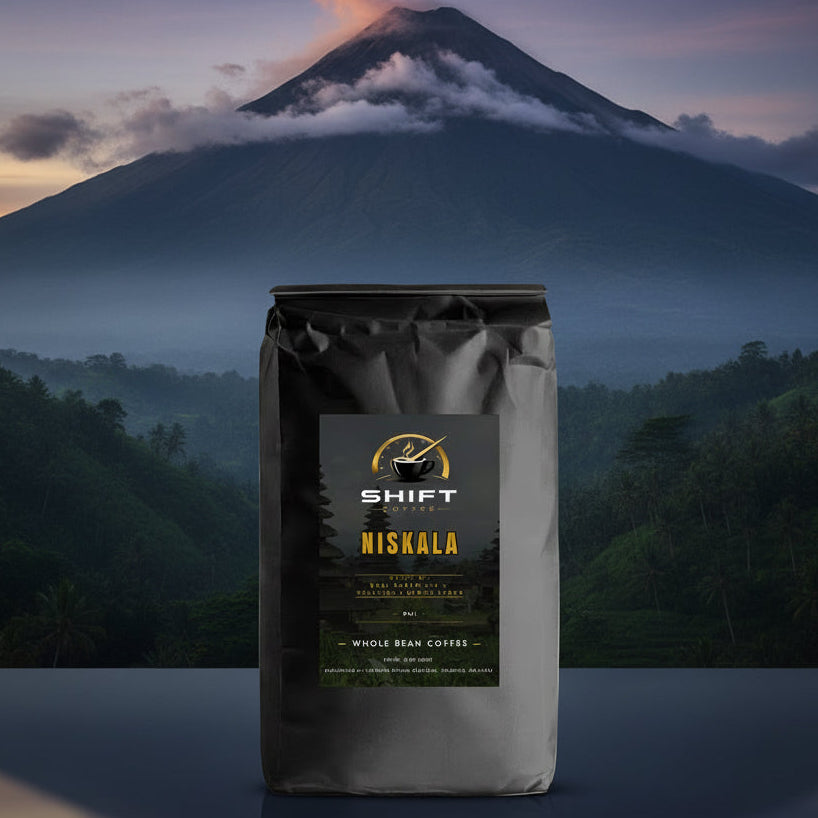
Niskala from Bali illustrates this clearly. Sourced from the volcanic highlands of Kintamani at 1,200–1,600 meters, it is grown in volcanic loam and processed using the wet-hulled method before being sun-dried on raised beds.
The cup is built for depth: dark chocolate, molasses, brown sugar, full body, and low acidity.
Do not reduce that profile to “volcanic soil equals chocolate.” That is too simplistic. The flavor is the result of a system: highland climate, local agricultural conditions, coffee varieties, wet-hulling, drying, and roasting working together.
Kumul Rise from Papua New Guinea offers another example. Grown in the Chimbu Province highlands in volcanic loam, this fully washed coffee presents caramel, honey, and subtle fruit brightness. The result is balanced rather than aggressive.
Same broad soil category. Different origin. Different cup.
Climate controls the pace and consistency of maturation.
Temperature is the most obvious variable. Cooler conditions generally extend ripening. Rainfall affects flowering, water availability, disease pressure, and drying conditions after harvest. Shade can moderate heat and slow maturation, although excessive shade can reduce the light available to the plant.
The timing matters as much as the amount.
Too much rain during ripening can create production and drying challenges. Too little water can limit cherry development. Uneven flowering can produce cherries at different stages of maturity, making selective harvesting more difficult.
This is why “country flavor” is never absolute. Kenya contains many microclimates. Mexico contains multiple mountain systems. Peru spans dramatically different growing environments. Even neighboring farms can produce different results.
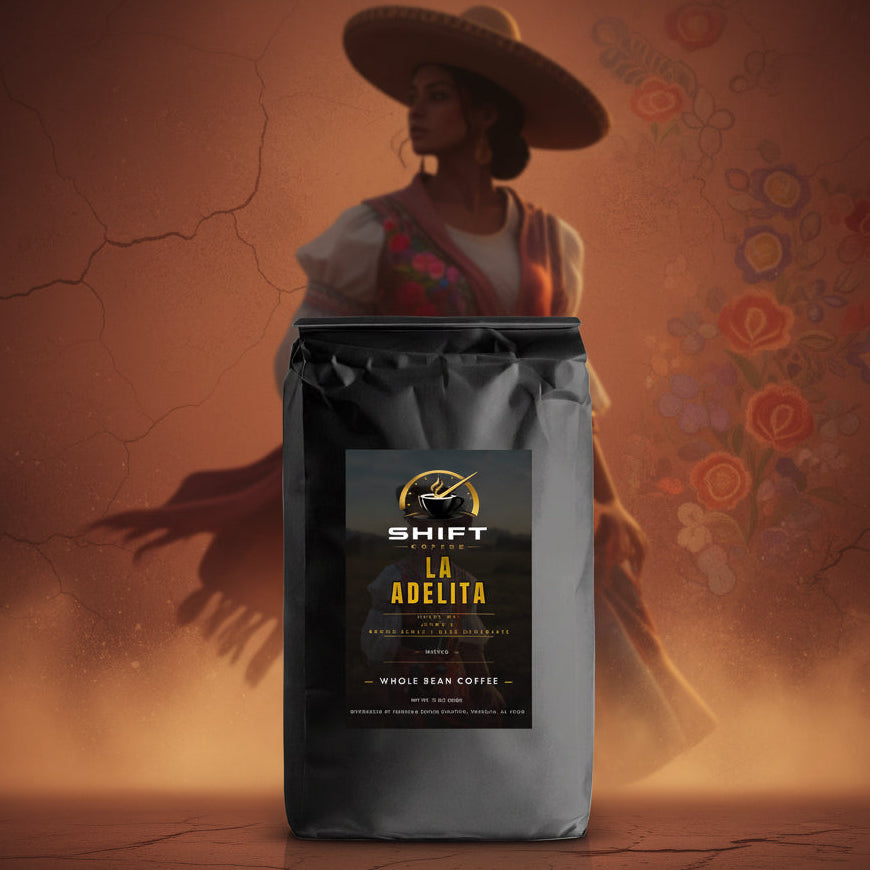
La Adelita from Chiapas, Mexico, comes from 1,400–1,900 meters and presents lemon, brown sugar, and dark chocolate. It is structured, creamy, and balanced. The acidity is clear without dominating the cup.
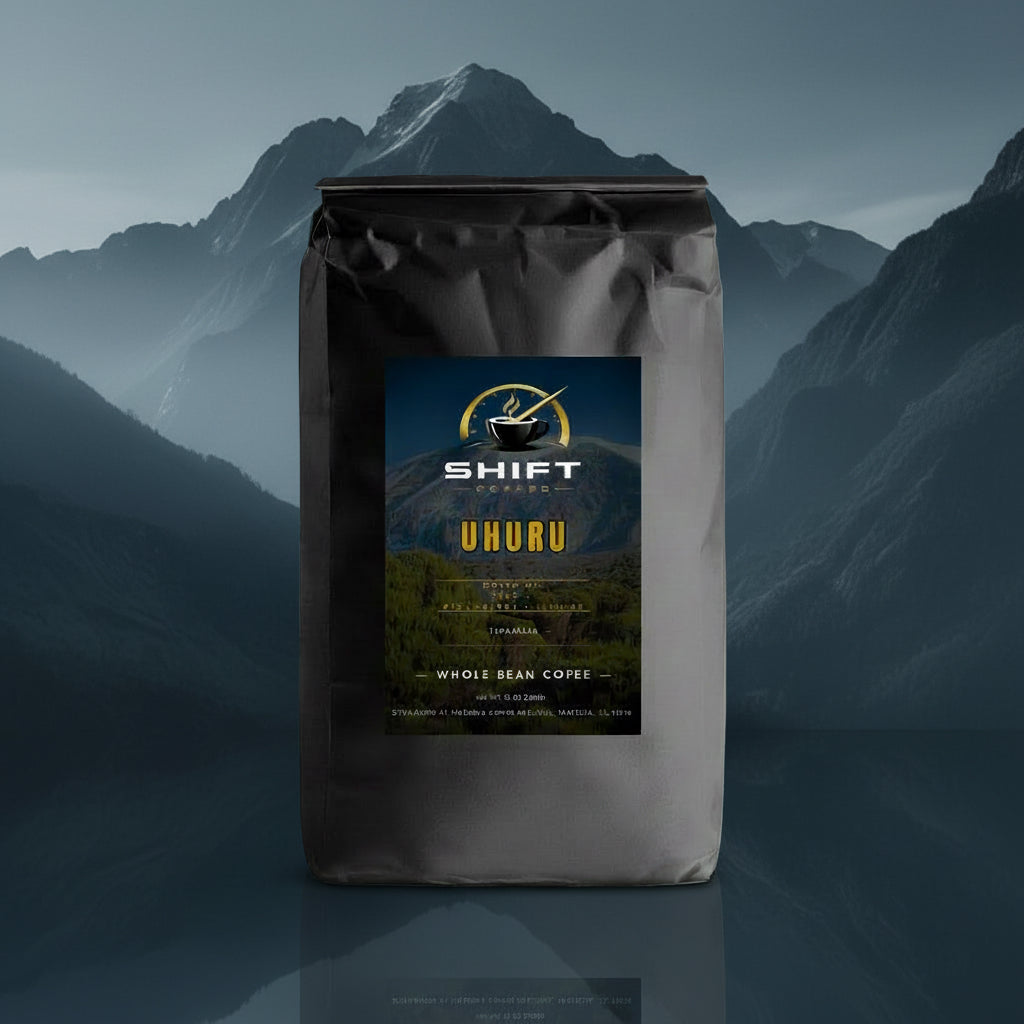
Uhuru from Tanzania comes from the Mbeya highlands at 1,200–1,900 meters. Its fully washed process and raised-bed drying support a lighter, cleaner profile built around pear, strawberry, floral notes, and jasmine.
Both coffees occupy overlapping elevation ranges. Their climate, genetics, local growing conditions, processing, and roasting create different sensory outcomes.
Processing separates the coffee seed from the fruit. It also changes how the coffee tastes.
The fruit is removed before drying. This generally produces more clarity, brighter acidity, and a cleaner separation between flavor notes.
Expect washed coffees to emphasize:
Uhuru, Nyota, Kumul Rise, La Adelita, and Andes Ascent are all presented through washed-style processing, though the exact methods differ by origin.
The coffee cherry dries with the fruit around the seed. This can create heavier body, more intense fruit character, and wine-like or fermented notes when carefully managed.
Some mucilage remains during drying. This often lands between washed and natural profiles, combining sweetness and body with moderate clarity.
Processing cannot rescue poor raw material. It can only emphasize or suppress what the bean already has. Good terroir creates potential. Good processing protects it.

Use this as a starting point, not a rigid rulebook.
| Origin | Environmental signal | Expected cup direction |
|---|---|---|
| Uhuru : Tanzania | Mbeya highlands, 1,200–1,900m; clay mineral-rich soil; fully washed | Pear, strawberry, jasmine, light body, clean clarity |
| Niskala : Bali | Kintamani highlands, 1,200–1,600m; volcanic loam; wet-hulled | Dark chocolate, molasses, brown sugar, full body |
| Nyota : Kenya | Othaya, Nyeri, 1,700–1,890m; fully washed | Orange, lemon, floral lift, lively finish |
| Kumul Rise : Papua New Guinea | Chimbu highlands; volcanic loam; fully washed | Caramel, honey, subtle fruit brightness |
| La Adelita : Mexico | Chiapas highlands, 1,400–1,900m; washed | Lemon, brown sugar, dark chocolate, creamy body |
| Andes Ascent : Peru | Piura and Amazonas, 1,100–1,700m; gully washed | Silky sweetness, salted caramel, citrus brightness |

Choose by sensory direction:
Your brewing method can either clarify origin character or cover it.
For a clean comparison, use the same variables for every coffee:
For bright coffees such as Nyota and Uhuru, use a paper-filter pour-over. The clean filtration and controlled extraction can highlight citrus, floral notes, and acidity.
For Niskala, Kumul Rise, La Adelita, or Andes Ascent, try a pour-over first, then compare with an immersion brewer or French press. More body and retained oils can reinforce chocolate, caramel, molasses, and honey characteristics.
If the cup tastes sharp and thin, grind slightly finer or increase extraction. If it tastes bitter, dry, or heavy, grind coarser or reduce contact time.
Do not change the coffee and the brewing method at the same time. Control the variables. Taste deliberately.


Terroir only matters if the coffee arrives with its aromatic potential intact.
Shift Coffee builds direct relationships with top-tier farms and selects beans for quality, character, and consistency. We roast in small batches with precision, then roast specifically for each order right before shipping.
That roasted-to-order approach protects the experience from unnecessary holding time. It keeps the coffee focused on what matters: aroma, sweetness, structure, and a clear expression of origin.
Choose your origin. Brew with control. Let the environment speak.
Explore Shift Coffee’s Global Selects, or use our brewing guide to build a more precise daily cup.

