Cart
0
You may also like


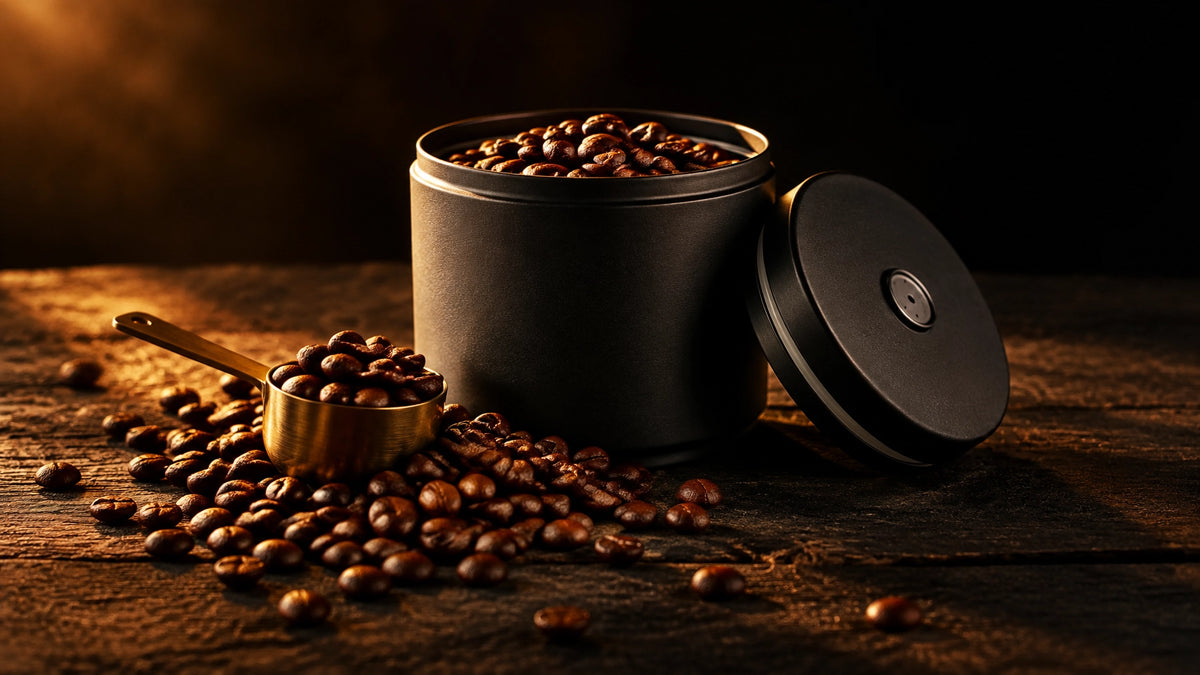
Fresh coffee does not stay fresh by accident.
The moment coffee is roasted, time starts working against it. Oxygen strips away aromatics. Light breaks down delicate compounds. Heat accelerates staling. Moisture damages texture and flavor. Every day adds more exposure.
Most people respond by buying a better grinder, a more expensive brewer, or a new storage gadget. That is backwards.
Start with fresh roasted coffee beans. Store them correctly. Grind only what you need. The equipment comes after the fundamentals.
Coffee is resilient. It is not indestructible. Protect it from these five variables:
Oxygen drives oxidation. That process dulls aroma, flattens acidity, and turns a structured cup into something muted and papery.
Every time you open a container, you replace the protective atmosphere around the beans with fresh air. Leave the container open on the counter and the damage continues unchecked.
A one-way valve helps in the early stage. Roasted coffee releases carbon dioxide after roasting, and the valve allows that gas to escape without allowing the same amount of oxygen back in. It is useful. It is not magic.
Once you open the bag, limit air exchange. Open it, dose your beans, and seal it immediately.
Light is not just a visual problem. UV exposure breaks down organic compounds in coffee, including the oils responsible for aroma and body.
That clear glass jar on your countertop may look attractive. It is a poor storage system if sunlight reaches it.
Use an opaque container. If your container is transparent, keep it inside a dark cupboard. Better yet, skip the clear container entirely.
Heat speeds up chemical reactions. Store coffee near a stove, oven, toaster, kettle, dishwasher, or sunny window and you are accelerating the loss of freshness.
Room temperature is appropriate. Warm is not.
A cool, dark pantry beats a convenient spot beside your espresso machine. Convenience is not a storage strategy.
Coffee is hygroscopic. It absorbs moisture from the surrounding environment, along with odors and flavors.
That makes the refrigerator especially problematic. It is cool, but it is also humid and full of competing aromas. Coffee stored beside onions, leftovers, or garlic can absorb those odors.
Keep your beans away from sinks, steam, kettles, and other high-humidity areas. Never pour warm beans into a cold container or freezer. Condensation is the enemy.
Even perfectly stored coffee changes over time. Storage slows the decline. It does not stop it.
Fresh roasted coffee beans deliver their best combination of aroma, sweetness, acidity, and body while those volatile compounds are still active. Buy what you can use efficiently. Do not build a coffee museum in the back of your pantry.
Surface area.
A whole coffee bean exposes relatively little of its interior to air. Grinding fractures the bean into hundreds or thousands of particles. That creates dramatically more surface area for oxygen to reach.

That is why whole bean coffee holds its character longer than pre-ground coffee under the same conditions.
Use this hierarchy:
Pre-ground coffee is not automatically bad. It is simply less forgiving. If you use it, store it with the same discipline: opaque, airtight, cool, dark, and dry.
For maximum control, explore Shift Coffee’s whole bean collection, including the Global Selects and Core Blends.
Follow this setup. It is simple because it works.
Buy enough coffee for roughly one to two weeks of normal use. Smaller quantities reduce the amount of time your beans spend exposed to air after opening.
If you drink slowly, order smaller bags more frequently. If you drink quickly, size your purchase around your actual consumption instead of an aspirational routine.
Choose a container made from stainless steel, ceramic, or another non-reactive material. It should block light and close with a reliable gasket or seal.
Do not use an unsealed jar. Do not rely on a loose lid. Do not assume a decorative canister is airtight because it looks premium.
An airtight container limits oxygen exchange. An opaque container blocks light. You need both.
A one-way valve is valuable in properly designed coffee packaging. It allows carbon dioxide to escape while limiting oxygen entry.
Before opening, keep the coffee in its original valve-equipped bag if it is well sealed and stored correctly. After opening, transfer the beans to an airtight container if the original bag no longer closes securely.
The valve does not compensate for leaving the bag open. It does not protect coffee from heat, sunlight, humidity, or months of neglect.
Store the container in a pantry or cupboard at normal room temperature.
Keep it away from:
A dark cupboard is more important than a specialized coffee shelf.
Dose the beans. Grind them. Brew immediately.
This protects the aromatic compounds that make fresh coffee taste fresh. It also gives you tighter control over extraction because the grind is prepared for that specific brew method.
Need a refresher on technique? Use Shift Coffee’s How To guide.
Freezing coffee is not automatically wrong. The problem is casual freezing.
People open one large bag every morning, remove a scoop, and return the bag to the freezer. That creates temperature swings and repeated condensation. It also exposes the beans to freezer odors every time the container opens.
That is not preservation. It is a slow quality leak.

Freezing can work for coffee you will not use soon. Follow this protocol:
The freezer is a long-term tool for overflow, rare coffees, or slow-drinking households. It is not the default storage location for your daily beans.
The refrigerator combines three problems:
Coffee absorbs what surrounds it. That means your beans can pick up the aroma of yesterday’s leftovers while losing their own.
Keep coffee out of the fridge. A cool, dark pantry is the better everyday environment.
It does not. Freezing may slow further deterioration, but it cannot restore lost aromatics. Start with fresh beans and freeze only when you have a clear reason.
Visibility is not freshness. If the jar is unsealed, it is a downgrade. If it is clear and exposed to light, it adds another problem.
Only if you use it quickly. Otherwise, a large bag stays open longer, receives more air exchange, and spends more time declining.
Small batches are more efficient from a flavor standpoint.
Storage matters. Starting point matters more.
You cannot store mediocre or old coffee into peak condition. The best container in the world cannot reverse oxidation that has already happened.
Shift Coffee roasts specifically for each order right before shipping. That gives you a stronger starting point: coffee selected and roasted for the order, then moved quickly into your routine.
Your job is to protect that work.
Choose fresh roasted coffee beans from Shift Coffee. Keep them whole. Store them in an opaque airtight container in a cool, dark place. Buy manageable quantities. Grind only what you brew.
Skip the fridge. Treat the freezer as a specialized tool, not a reflex. Avoid unsealed jars and oversized bags that sit open for weeks.
No gadget can outperform disciplined storage.
The protocol is direct:
Buy fresh. Store sealed. Keep it dark and cool. Grind to order. Brew without delay.
That is how you keep coffee tasting like the coffee you paid for.

